Made & Hosted in Germany
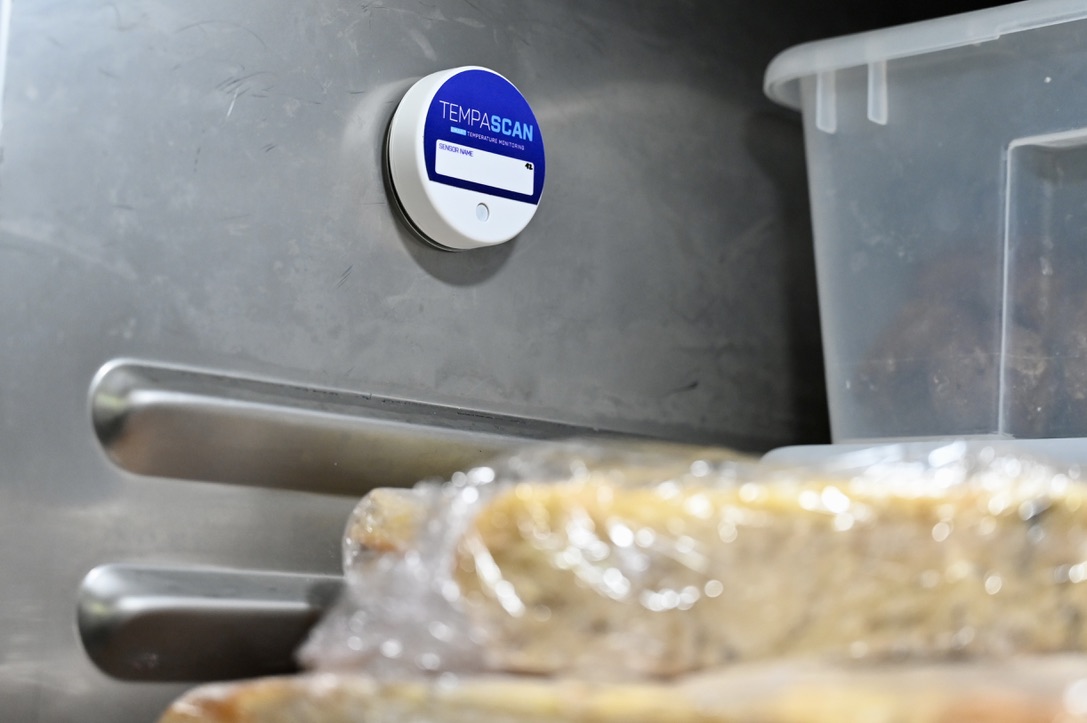
What restaurants, caterers and hotels should look out for when choosing a provider
Automating temperature monitoring is an important step for the food service, catering and hotel industries to improve food safety, efficiency and legal certainty in everyday life. This not only means digitally recording measured values, but also simplifying processes, identifying risks at an early stage and making HACCP documentation permanently reliable.
In the restaurant and hospitality industries in particular, we see every day just how quickly manual checks reach their limits due to staff shortages, peak hours that intensify workflows, and ever-increasing documentation requirements. In addition, cold storage facilities, refrigerators, freezer areas, warehouses, and—in some cases—mobile catering operations all need to be monitored simultaneously. Those who continue to rely on paper lists or unclear, piecemeal solutions will create additional work rather than providing real relief.
Why it makes sense to automate temperature monitoring
Many companies still work with manual temperature controls. This may seem simple at first glance, but it costs a lot of time on a day-to-day basis. Values have to be read, noted, filed and, if in doubt, found again later. There is also an increased risk of entries being missing, delayed or completely forgotten in stressful situations.
This is precisely the problem for the restaurant, catering and hotel industry. A cooling unit doesn’t just break down during office hours. A malfunction can occur at night, at the weekend or in the middle of ongoing operations. Without automatic monitoring, a breakdown often goes unnoticed for too long, which can lead to loss of goods, hygiene problems and difficulties with inspections.
Anyone who wants to automate temperature monitoring should therefore not just look for any software and provider. The decisive factor is a solution that works reliably on a day-to-day basis without creating additional complexity. Good providers combine sensors, alarms, reporting and simple operation into a system that really takes the strain off the business.
Typical problems in the restaurant and hotel industry and how automation can help here
In practice, the challenges faced by many businesses are similar. Nevertheless, they affect hotels, caterers and gastronomic concepts in different ways.
Time pressure and staff shortages
In kitchens, buffets, warehouses and banquet areas, there is often little time for manual routines. Temperature checks therefore quickly become an additional burden. It becomes particularly difficult when teams are changing or new employees have to be trained at short notice.
Paper-based documentation
Paper lists are prone to errors in everyday life. Figures are overlooked, noted down incorrectly or added later. In addition, the effort required for filing and verification is unnecessarily high. During audits or official inspections, the exact documents required are often missing at the touch of a button.
Loss of goods and operational risks
If a cooling unit breaks down and the information arrives too late, direct costs are incurred. Processes also suffer if goods have to be replaced at short notice or entire production steps come to a standstill. In hotels, this often affects breakfast, room service, banquet kitchens or storage areas. In catering, transport and deployment situations are added to this.
High HACCP and verification requirements
Companies must document their temperature management in a traceable manner. It is therefore not enough to simply store values. It is crucial that reports remain complete, exportable and available in the long term. It is precisely at this point that a solution suitable for everyday use is often separated from a risky offer.
Selecting a provider: What really matters
If you want to automate temperature monitoring, you shouldn’t just compare offers based on price. Much more important is the question of whether a system actually solves the problems in day-to-day operations.
Simple hardware and uncomplicated installation
A good solution should be able to be used without a great deal of technical effort. Sensors must be easy to place and commissioning should be possible without complicated installation. Optional support by telephone or video is useful, especially if several locations or different areas of use are integrated.
Rapid alerting in the event of failures
A key criterion is the speed of response. Good systems alert quickly and via multiple channels. Apps, text messages and emails ensure that critical incidents are not overlooked. Email notifications alone are often not enough in an emergency.
Legally compliant reports and long-term data storage
The documentation must function just as well in everyday life as it does during an audit. It should therefore be clear before signing a contract whether reports are compliant with the authorities, how long data will be stored and whether a complete export is possible at any time. Anything else creates uncertainty instead of relief.
Transparent prices and fair contracts
Reputable providers clearly state what is included in the monthly price. Ideally, this includes hardware, software, reports, support, updates and alarm functions. A test phase and flexible contract models are just as important. Long commitments with unclear services are a clear warning signal.
Which questions are particularly helpful in the initial consultation
A structured list of questions is particularly useful in the selection process. This quickly reveals whether a provider really understands everyday life in the restaurant, catering and hotel industry.
Instead of general sales promises, concrete answers count. How quickly is an alarm triggered? What happens in the event of an Internet failure? How is data stored? Can reports be customized? Are there references from your own region or industry? And what happens to the existing HACCP data in the event of termination?
The following also applies: Verbal promises should not be sufficient. In particular, statements on official conformity, sensor exchange or data storage should be confirmed in writing before the contract is concluded. This significantly reduces the risk of surprises later on.
Conclusion: Automate temperature monitoring and check providers in a structured manner
If you want to automate temperature monitoring, you should not just look for a technical solution, but a system that simplifies processes, reduces risks and provides reliable evidence. In the restaurant, catering and hotel industry in particular, it is crucial that the solution is easy to understand, reliable and flexible to use.
A good provider not only creates transparency when it comes to temperatures, but also security in everyday life. That’s why it pays to take a close look at hardware, alarms, reporting, support, contract terms and data storage. The result is a solution that not only works digitally, but also provides real operational relief.
Questions for the Initial Meeting with Providers
The following overview is based directly on the guiding questions from the interview guide and serves as a good foundation for comparative discussions with providers.
| Your question | Perfect answer | Warning signal |
|---|---|---|
| How many sensors are included in the package? | All necessary sensors are included in the package or can be added flexibly (with transparent pricing!). Suitable for refrigerators, freezers, storage rooms, and all types of spaces. No hidden hardware costs. | “Sensors are billed separately” or only 1–2 devices are included in the package. This often leads to unexpected additional costs. |
| Who installs the devices? | Plug & Play: Sensors are simply placed; no technician required. Optional: free installation support via phone or video. | A paid installation service that’s required, or a complicated setup process without support. |
| What happens if a sensor is defective? | Free replacement within 24–48 hours, shipping included. Warranty for the entire service life. | You’ll have to cover the cost of repairs yourself, or deal with long response times for replacements. |
| Are the reports truly compliant with official requirements, even in my (federal) state? What about Austria and Switzerland? | Yes, with specific reference clients in the region and written confirmation. Reports are accepted by the Health and Veterinary Office and are FSE-compliant. Specific timestamps are included. | “Generally compliant” or no references from the state. Vague wording is a clear red flag. |
| Can I customize the reports? | Yes, you can add your own logo and corporate identity (such as colors, etc.), as well as specify custom time periods and select measurement points. Export to PDF with the click of a button. | Only standard reports are available, with no customization options and requiring manual effort for exporting. |
| How long will my data be stored? | At least 10 years, in accordance with statutory HACCP requirements. Data can be retrieved and exported at any time. | Less than 10 years or data deletion upon termination. This is critical for future audits. |
| What happens to my data if I cancel my subscription? | A complete data export will be provided. The HACCP documentation remains the property of the business. | Data will be deleted, or exporting it will incur an additional charge. |
| How quickly will I be notified in the event of an outage? | Immediate alerts in under 5 minutes via text message, WhatsApp, and email—even at night and on weekends. | Only email notifications or response times of 15–30 minutes. That’s often too late. |
| Is support available 24/7? | Direct access via phone or email. A dedicated contact person is ideal. | Only during business hours or exclusively via the ticket system without phone support. |
| What happens if the Internet fails? | Immediate alerting if the Internet or gateway/router fails, for example if a plug is pulled or sensors do not send a signal. | Data loss in the event of internet failure or no alarm without a connection. |
| Is there a free trial period? | Yes, at least 14 to 30 days free of charge and without obligation before making a decision. | No test phase or immediate contract commitment. |
| Is there a minimum contract term? | Can be terminated monthly, no long-term risk, full flexibility. | 12- or 24-month commitment without special right of termination. |
| What exactly is included in the monthly price? | All-inclusive: sensors, software, HACCP reports, support, and updates. No hidden additional costs. Phone support for installation and technical questions is included. | If there are extra charges for reports, updates, additional users, or support, you should take a critical look at the pricing model. |
Additional tip:
It’s worth specifically asking for 2 to 3 reference customers from the food service industry in your own region whom you can contact directly. Providers with genuinely satisfied customers usually have no problem with this.
For more information on digital temperature monitoring and HACCP documentation:
Phone: +49 (0)30 85969434
Email: info@tempascan.com